
Well, the demo for Iron Bramble performed better than any of us expected. It is the first game of ours to reach overwhelmingly positive on Steam. And, it is 99% positive as well!
The feedback form also ended up with 1139 responses!
We also recently published Iron Bramble’s demo on Itch.
My favourite part of having our demo finally be out is seeing players do the craziest most creative stuff (I’ll have to make a separate post just to highlight what they get up to). I think that’s just a joy of making an expressive platformer. You get to see players improvise and come up with combinations you don’t expect. It makes watching playthroughs more interesting when you can see players have distinctive ways of approaching the same platforming challenge.
Thank You for the Feedback (not everything will be in this final demo update but does not mean we have no plans to implement…)
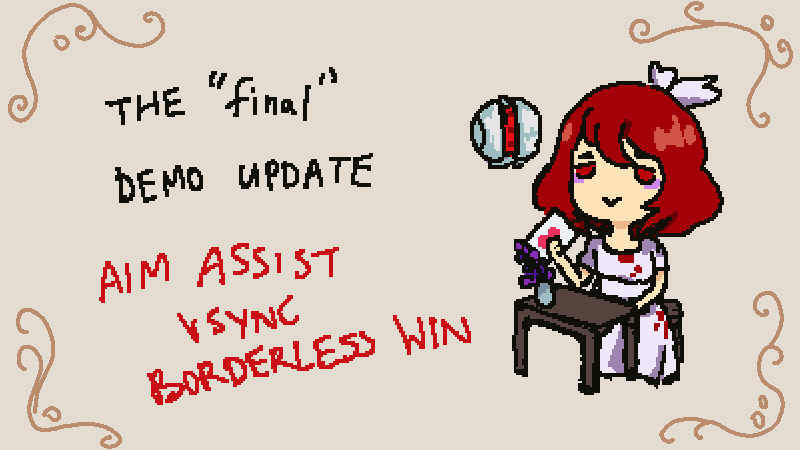
Though we just published the final demo update (for now), that doesn’t mean we won’t implement some of the feedback we have gotten. There’s just a lot to go through.
Off the top of my head, I know we want to add in another grapple mode (It was present in Rusted Moss). There is also the intro… many players felt it shouldn’t progress automatically due to it being too fast to read. We’re also going to take a look at some visibility related options like being able to disable the CRT effect in menus… Anyway, those are just a few that come to mind.
We’ve also gotten to the stage of development where the demo is on a separate branch so anything we add to the main game will not automatically get applied to the demo. Because of this, we won’t make regular updates to the demo; we can focus more on development without having to worry about keeping the demo updated.
Still, it is obviously important for a demo to be a good representation of what players can expect in the final release. Aim assist for the grappling hook and some of the QoL settings are a couple features I am happy we were able to include in the demo’s final update. The full patch notes are available on the Steam post.
Dealing with Incompatible Feedback
It always makes me feel a little guilty when I read earnest feedback written by well-meaning players that I know we are going to ignore. Even though those players aren’t our target audience, I think the guilt comes from wondering if we give the wrong impression about what kind of game we want to make.
Implementing their feedback would make Iron Bramble the kind of game we don’t want to make. Not necessarily a bad game, just a different one from the kind we enjoy.
But it is hard to not feel guilty because of how much effort those players put into describing the kind of game they wish Iron Bramble could be. Oddly enough, the small handful of feedback from these players typically follow a similar cadence. They tend to mention how they have a background in game design, or that they are an experienced platformer player. Word count and detail is impressively high. They all tend to dislike the grappling hook and find the movement of the game unpleasant/random. The part that makes me feel most guilty is that they sign off with really wanting our game to succeed so they hope we take their feedback into account as they see so much potential in what Iron Bramble could be.
I don’t want to say they are wrong. (Though the phrase “objectively bad game design“ is a small pet peeve of mine as I find it a little reductive). I think their ideal game they are describing is one that could certainly exist. It very well might be a game that would do better than Iron Bramble would. But, it is also not the kind of game we are trying to make.
I feel guilty because they clearly put a lot of thought into their feedback but it is also seems they are unaware that the game design decisions they dislike are also deliberate decisions on our part. They’re holding out for changes to come to Iron Bramble that will never come. Hopefully those players find their ideal grappling hook game because it is clear that Iron Bramble won’t be that for them.
It feels like running a vegetarian restaurant and being asked for meat options. I’m relieved these players are a minority because that means Iron Bramble has managed to find its audience and that there are other players out there with similar tastes to ours.
Funnily enough, negative feedback from players who mention the game just isn’t for them gives me a stronger sense of kinship than feedback from players who feel the game’s design foundation needs a complete rework.
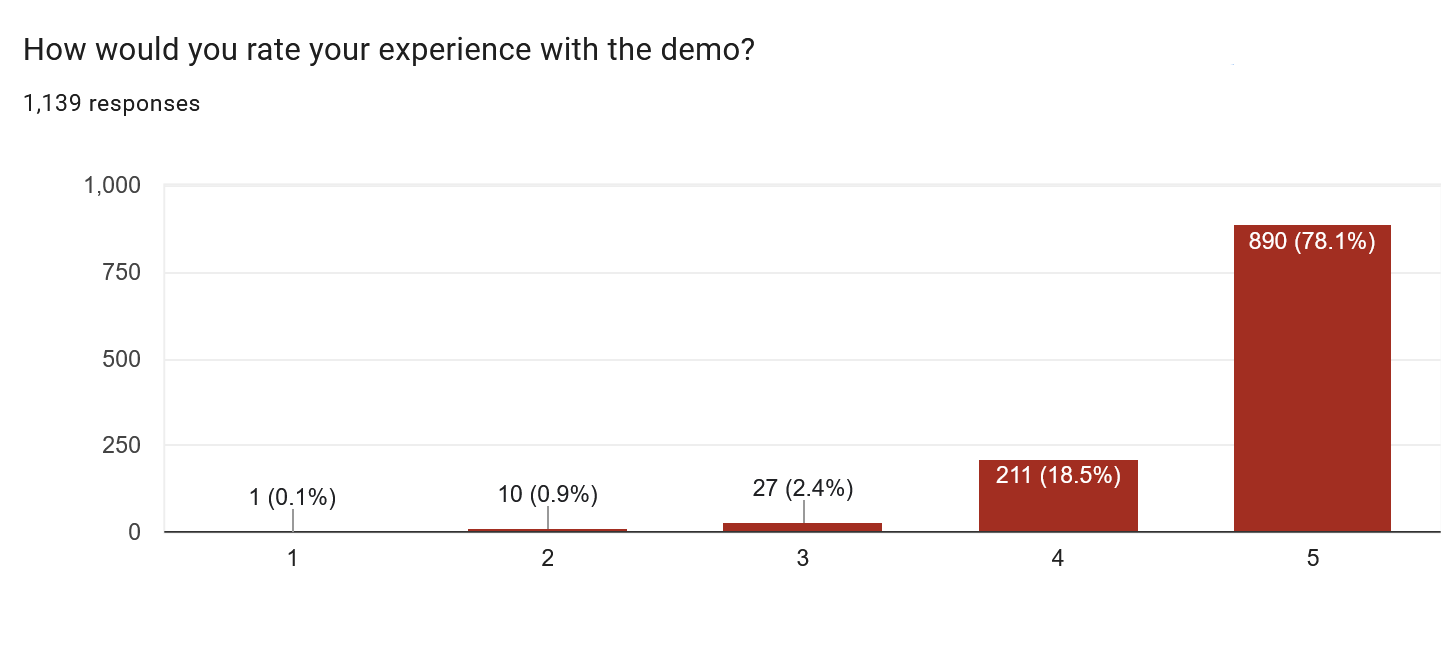
Our demo was received very positively! And yet I spend a long time talking about the minority of our players…
Marketing Issue?
Strictly numbers wise, it does make me really happy to see how the demo has been received. I know it seems silly to still ponder about the people for whom the game didn’t “click“ as they are a minority. However, I do think demos tend to skew more positive. I don’t have data to back that up. Just a feeling that players tend to be nicer when it comes to demos. A demo is a free sample, why waste energy on a negative review? Just decide not to buy the game and move on. (Also, I think demo reviews are not the most visible so not everyone knows you can leave reviews on them.)
It was a cause of some anxiety for me at some point as to how well some of our videos do. It made me nervous when people who haven’t played any of our games would remark it reminded them of Spider-Man or *insert some other grappling hook game here*. Acrobatics and crazy schmovement have been aspects of the game we love showing off but I worried it gave off the wrong impression. It is accurate gameplay footage but can players tell those moves we pull off are the result of developing the skill for it?
Iron Bramble isn’t a game where the grappling hook’s behaviour is “press button to execute grapple“ but a game where movement is skill-based with an extreme dose of player agency. Our grappling hook movement cannot allow the player to execute acrobatics with just one button press because it is built to allow for player expression - it isn’t following a pre-programmed parabola or straightforward fling.
But, that is something that is difficult to express when it comes to marketing the game. Many players might see there is a grappling hook and immediately draw comparisons to their favourite grappling hook games.
The demo gave me a huge sigh of relief when the positive reviews started coming in. The feedback form showed players who found our game from those social media videos enjoyed Iron Bramble’s movement. Emlise did not have the same worries though.
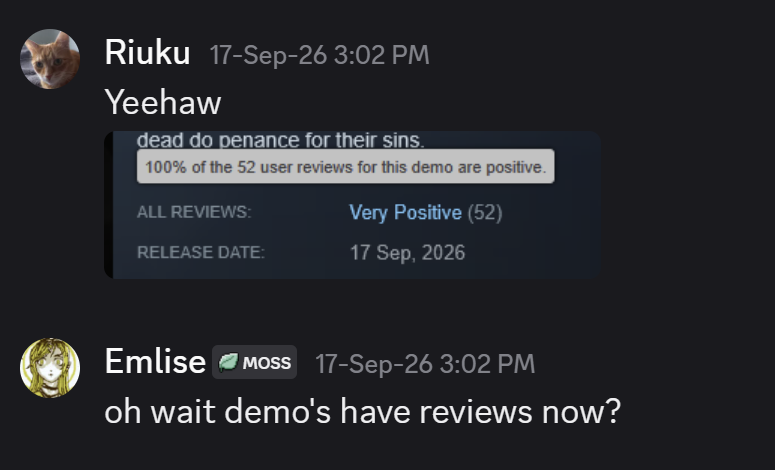
Emlise avoided a lot of the pre-demo stress
I think players who are already into expressive platformers and movement shooters can tell what kind of game we are trying to make. They recognise the “tells“ on what kind of game Iron Bramble is.
The positive feedback we have gotten - many from players that discovered Iron Bramble through TikTok/Instagram/YouTube - probably shows my anxieties that the videos are giving the wrong impression are unfounded.
Still, for the few that clearly felt Iron Bramble was going to be a different game, I wonder if it was possible to “convert“ them if our tutorial was handled differently.
About That Tutorial…
People love to hate on tutorials. They love when tutorials are “invisible”. It is especially popular to hate on “yellow paint“ in games that indicate to the player where to go.
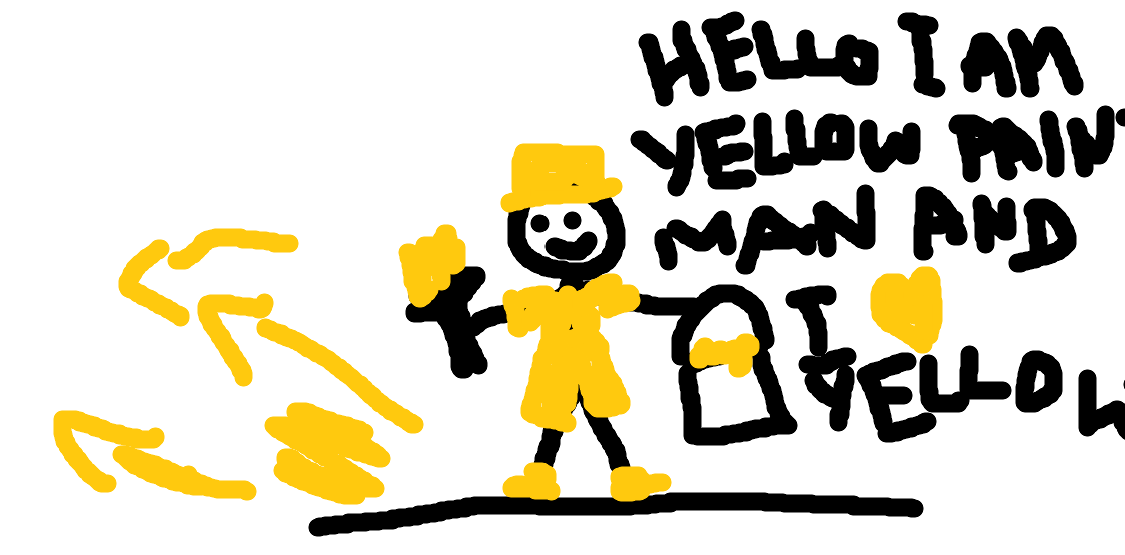
Iron Bramble concept art
I don’t think I have the absolute disdain for “yellow paint“ that many do because I think the invisibility of the tutorial just depends on what the vision for the game is. It makes sense to have very visible tutorials for games if you want to reach as wide an audience as possible. The tutorial would also have to be as simple as possible to include those who might have very little experience in games.
Iron Bramble is not a game that is meant to reach a wide audience. A big part of it is experimenting with movement and tools to see what you can do. Movement in our game is all about creativity.
By that logic, it might seem odd that our tutorials are quite visible. We also have more tutorials in Iron Bramble compared to Rusted Moss.
However, I think the reason why a lot of games can get away with not having more explicit tutorials is because of the internal game language someone develops from playing lots of games. There’s no need to tutorialise something innate people have picked up over years of gaming.
I think there are many players who don’t have the internal game language that Iron Bramble uses. Precision platformers have a long history and cause some players to develop certain expectations for how movement should be. Iron Bramble’s internal game language has more similarities to something you’d find in TF2 or platform fighters
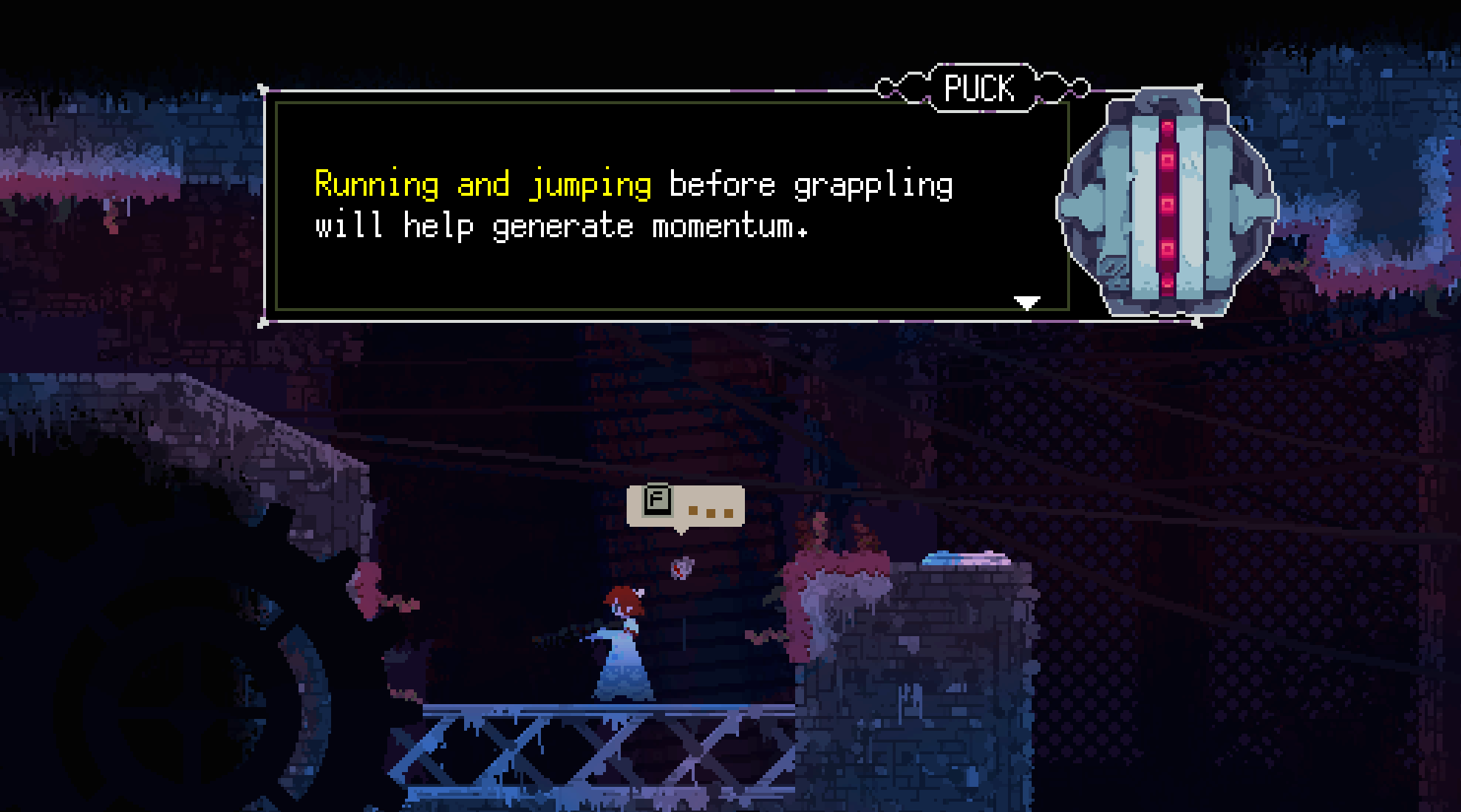
This was a very explicit tutorial but players who struggled in later parts of the game never internalised this concept.
So, I think there are some things about Iron Bramble’s tutorial that could be more explicit. Maybe we could convert those minority of players who came away from the demo feeling that the movement was “wrong“ and there was a “correct“ way we should implement it. That’s how I would address “incompatible feedback“ anyway without actually changing what we want the game to be anyway.
It is a simple concept - if the players who feel our movement is objectively “wrong“ are able to reach the fluidity of movement that the players who enjoy our game are able to achieve, they obviously wouldn’t think the underlying physics of the game needed to be changed. And, I think there is a base level of knowledge that tutorialisation could provide.
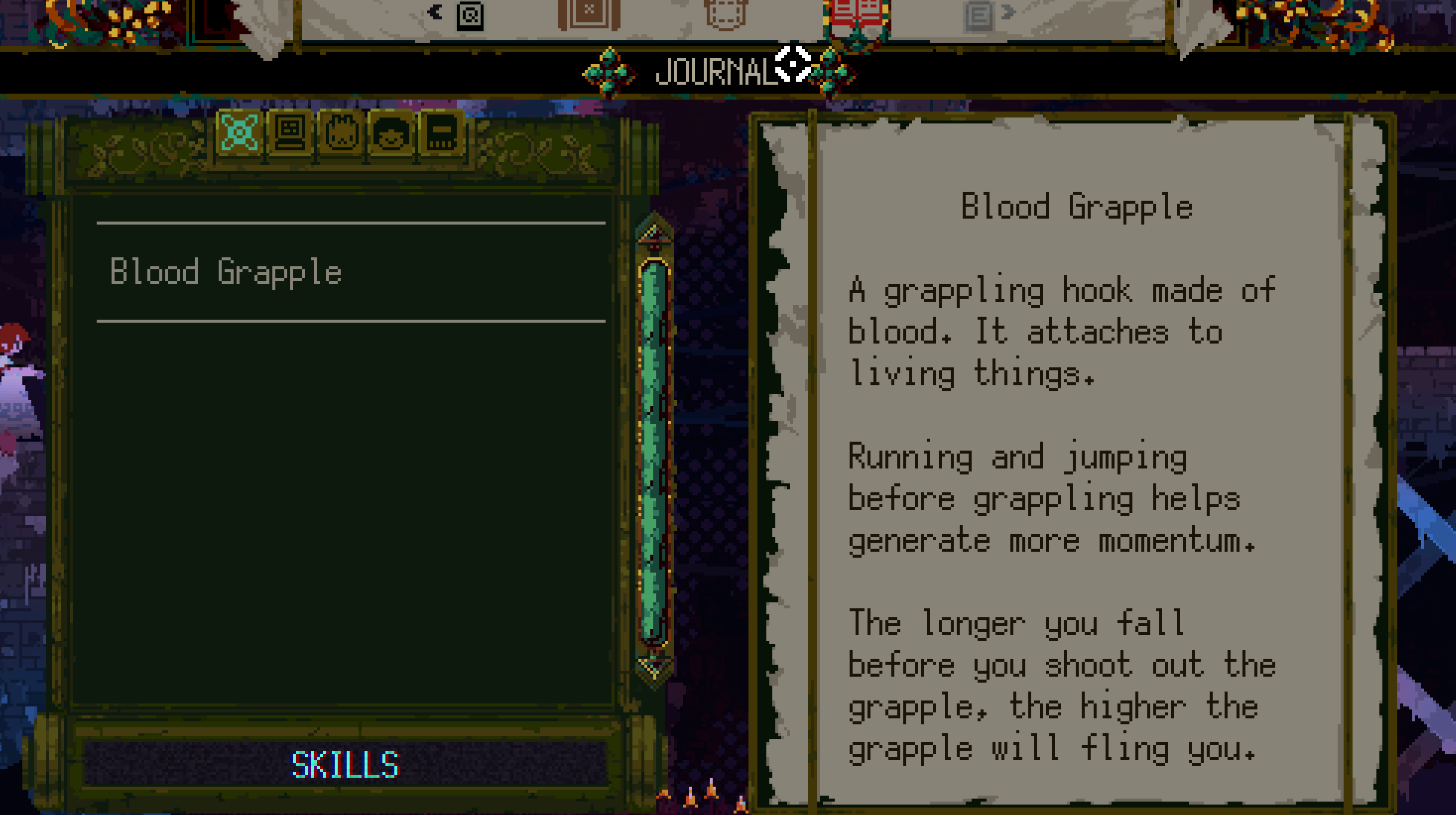
Details of how the grappling hook work show up in the journal but could be more explicit in the tutorial.
Iron Bramble does have more tutorials than Rusted Moss, but most just teach the absolute basics of how movement works. There’s more things that aren’t tutorialised in Iron Bramble. Greater mechanical depth gives players a larger amount of things they can discover on their own compared to Rusted Moss. I think we can make some of the starting tutorials a bit more explicit to even out the player skill gap. I actually think not pairing the holograms with text set some players up for failure because they would just be copying what the holograms are doing without understanding what was going on.
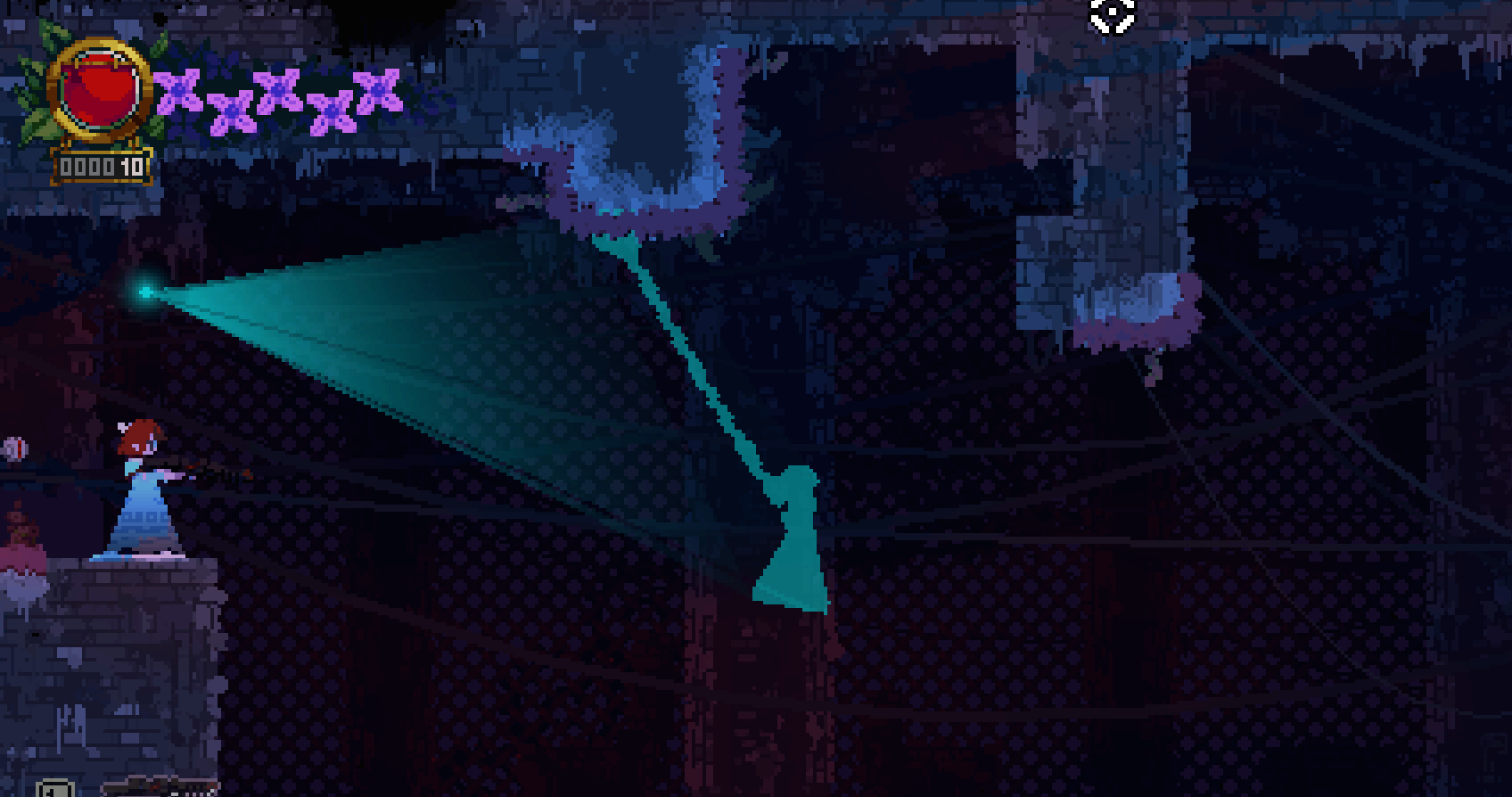
Some players might just copy what the hologram is doing without understanding what works and what doesn’t.
In Conclusion…
This whole post might seem a little silly. It is a lot of words (I have a tendency to write way too much and I didn’t spend enough time editing…) to deal with a subset of players that are not even our target audience. But, I think that it is also nice to give it our best shot to also make the learning curve at the start approachable to those who aren’t our target audience but would like to give our game a shot. Our priority is going to be preserving the gameplay people like and our own vision for the game. Still, I suppose we’ll just have to see how it goes during playtesting to see whether tutorial changes make any noticeable difference.
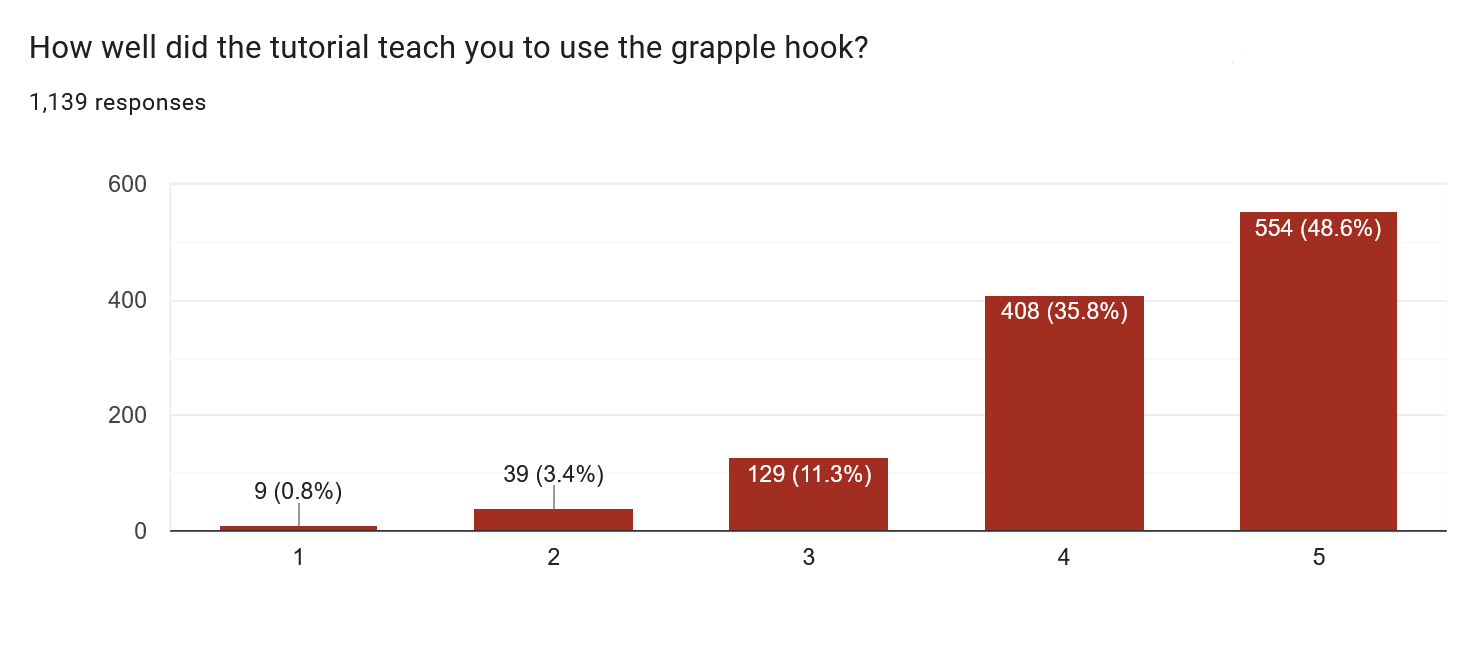
I am happy with how our tutorial was received.
I didn’t spend as much time talking about the feedback we are going to implement. As some become more fleshed out, I’ll see if any might be interesting to talk about in future devlogs. The demo was definitely helpful to us to see what worked and what didn’t. It is funny to see how hours of playing your own game blinds you to obvious changes that should be made.
Speaking of which, we hope to move into doing more playtesting soon!